Every parent wants their child to feel understood, respected, and supported as they grow. At Siskin Children’s Institute, we promote assent-based ABA therapy to help children build skills and reach their full potential.

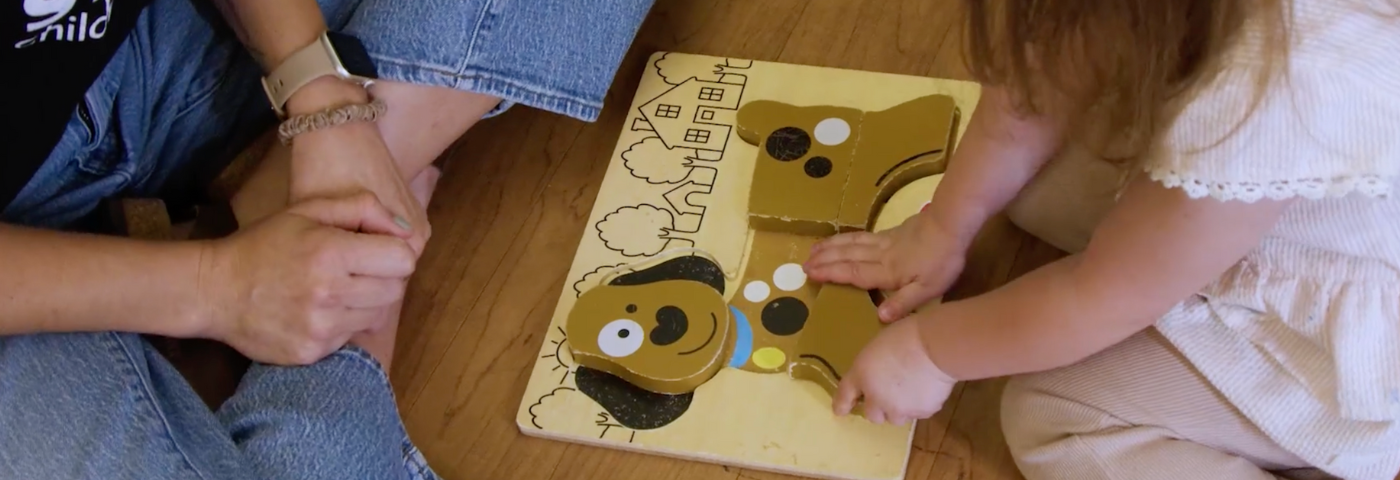

Every parent wants their child to feel understood, respected, and supported as they grow. At Siskin Children’s Institute, we promote assent-based ABA therapy to help children build skills and reach their full potential.
Siskin Children’s Institute offers comprehensive ABA therapy for children with autism ages 18 months to 12 years. We combine evidence-based methods with assent-based care, which we believe is ethical, effective, and respectful of each child we treat.
In ABA therapy, assent-based care ensures that children who cannot legally provide consent still have a voice in their treatment. Our ABA therapists view assent as the child’s voluntary willingness to participate.
[The BACB board defines assent as:
“Vocal or nonvocal behavior that can be taken to indicate willingness to participate in research or behavioral services by individuals who cannot provide informed consent (e.g., because of age or intellectual impairments).”]
Assent-based care prioritizes the learner’s comfort and agreement by helping ABA providers honor a clear “yes” and “no”. By doing so, providers create a safe and trusting environment where children feel respected and empowered in their therapy.
Assent-based care is important because it respects each child’s autonomy. By giving them a voice even when they can’t give legal consent, they are understood. Prioritizing assent also strengthens the relationship between the child, their family, and their therapist by building trust, which lays the groundwork for meaningful progress.
Giving children meaningful choices, whether big or small, tells them that their voice matters. Choice increases motivation, engagement, and a sense of ownership. When children feel they are respected, participation often happens naturally rather than out of obligation.
No, assent-based care is not currently a formal requirement in ABA therapy. However, at Siskin Children’s Institute, we incorporate assent-based care because we believe assent is ethical, evidence-based, and empowering to the children we serve. We view assent as a critical part of creating a respectful and effective learning environment.
In the context of ABA therapy, consent is provided by a parent or guardian. It is a formal agreement based on being informed about services and having the legal capacity to make treatment decisions.
Assent comes from the child and reflects their willingness to participate in an activity during therapy. Unlike consent, asset is not a one-time decision and can shift throughout a session depending on a child’s comfort, motivation, and preferences in the moment.
Children show assent in both verbal and nonverbal ways. The ABA therapists at Siskin’s Children’s Institute are trained to recognize each child’s unique communication style while also identifying consistent signs of willingness to participate.
Common signs of assent include:
Assent withdrawal occurs when a child communicates, verbally or nonverbally, that they no longer wish to participate in an activity.
At Siskin Children’s Institute, we carefully look out for these changes so we can respond appropriately and adjust support as needed.
Common signs of assent withdrawal include:
Some signs may be clear, while others are more subtle. Because of this, our ABA therapists are educated on how to interpret individual patterns of communication and respond in a way that effectively supports each child.
One common misconception is that allowing a child to say “no” means they will stop participating in ABA therapy altogether. In practice, we often see the opposite. When children feel respected and have ownership over decision-making, they are more likely to engage over time. Offering choice supports, rather than replaces, participation.
Another misconception is that assent only applies to verbal children. At Siskin Children’s Institute, we recognize assent in many forms, both verbal and nonverbal, based on each child’s unique communication style.
A third misconception is that checking for assent slows down therapy. While it may require more intentional practice at first, assent-based care often leads to stronger engagement, fewer challenging behaviors, and a more positive learning environment for both the child and the therapist.
Our ABA therapists carefully observe and listen for both verbal and nonverbal signs of assent or withdrawal. Each child is unique and therefore has specific indicators of assent we look for, as well as a unique communication style that we take into account.
When a child is working with multiple professionals at Siskin (for example, a speech therapist), our team collaborates to better identify their individual signs of assent and withdrawal.
To support engagement and address challenges that can arise in obtaining assent, we create sensory-friendly environments customized to each child’s needs and interests, with the goal of increasing comfort and cooperation. We also build choice into sessions, offering meaningful options in tasks, rewards, breaks, and pacing of the sessions. This helps children make decisions about their participation and communicate them confidently.
Our ABA therapists participate in ongoing training for assent-based practices, ensuring care is current with the latest research and methods.
If you’re seeking assent-based ABA therapy for your child, Siskin’s Children Institute is here to support you. We offer onsite ABA therapy at our downtown Chattanooga clinic and are accepting new patients. To get started, ask your pediatrician or medical provider for a referral to Siskin today.
